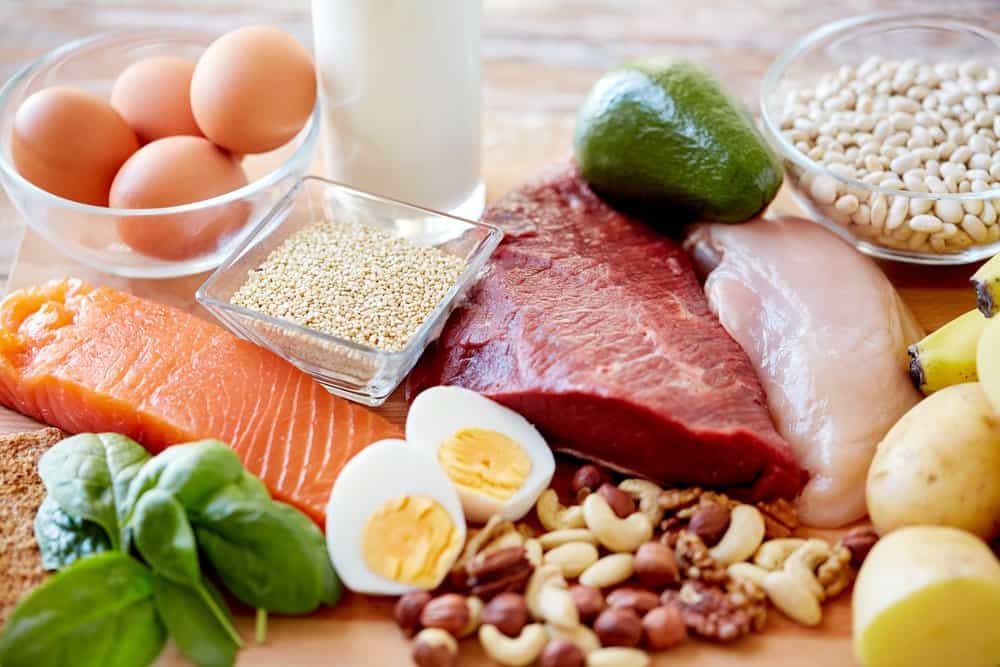
Hardcore bodybuilders, powerlifters, weightlifters, and even most other athletes eat a ton of protein in a day. OK, they don’t eat a “ton”, but they do eat more than the average person. There are myths and stories about professional bodybuilders and strongmen who eat 300-500 grams of protein each day. Most of us can’t follow that prescription so we end up with the nagging question, “how much protein should I eat in a day?” This leaves us with a number of additional oft-debated questions, such as:
“How much protein do the professionals eat?”
“Exactly how much protein do I eat?”
“How much protein is appropriate for me?”
“Can I physically eat ‘too much’ protein?”
“If so, what are the side effects?”
“Exactly how much is ‘too much’?”
Let’s stop to consider all of the factors that go into determining how much protein we should eat.
Utilize all kinds of fruits, vegetables, spices, and fun ingredients like peanut and almond butter, honey, oatmeal, and flavor extracts. Whatever you have laying around probably can be used in one of these protein shakes.
For those without digestive issues, check out the link to Optimum Nutrition below. It is an awesome product with a huge variety of flavors and sizes.
For those who are lactose intolerant, check out Muscle Milk protein powder, which also comes in several flavors and sizes. When I found Muscle Milk I could finally start mixing protein recipes again!
Need protein powder?
Optimum Nutrition is nutritionally the healthiest and highest quality protein powder I’ve found at a reasonable price. It comes in over 20 different flavors and is available in 1 lb, 2 lb, 5 lb, and 10 lb containers. Click here to order or learn more.
Muscle Milk is an equally great product and is also great for lactose intolerance. That’s right, if whey protein usually makes you sick give Muscle Milk a try. It comes in at least 10 flavors and in 2.5 and 5 lb jugs. Click here to order or learn more.
At times there can be a benefit to scheduling a zero-carb, high-fat, high-protein meal in your diet. You might consider going on a 3-week Atkins-style super-low carb diet to kick start a hardcore fat loss phase in your training.
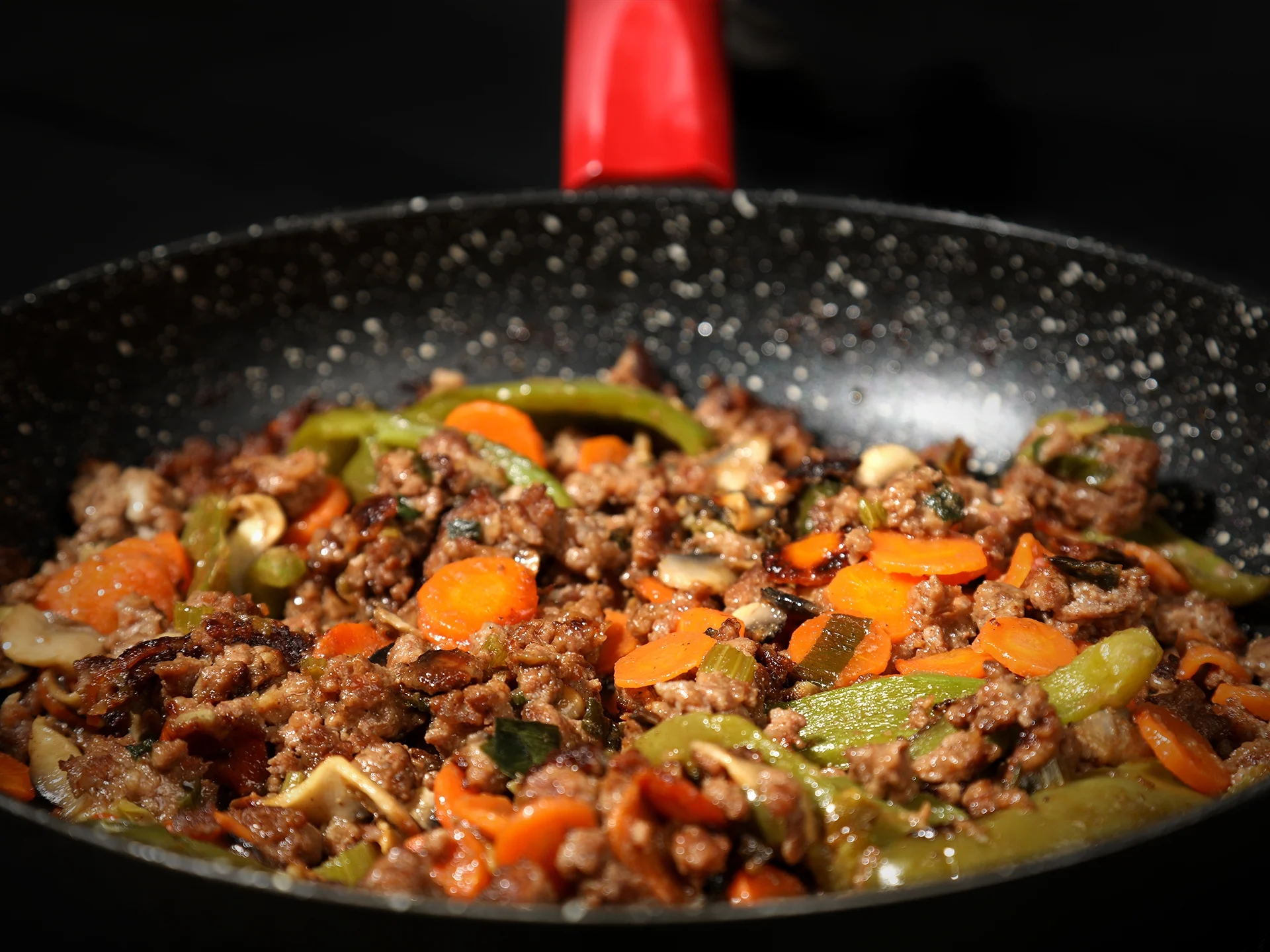
For this, you will need to eat lots of meat, cheese, and vegetables, and not much else. I have the perfect recipe for this; it’s called Matt’s Meat and today I will share the story of Matt’s Meat with you.
Intermittent Fasting Part 1 – A Diet Strategy to Get You Ripped
For many people, losing fat and keeping it off is an impossible task, and they’d sooner reach China by grabbing a shovel and flinging dirt around. The road to leanness is littered with the remnants of horrible-tasting food, dingy Tupperware containers, and the dreams of those who abandoned their quest because of the seemingly insurmountable difficulty.
We’ve all been there at one point or another, but those who’ve managed to travel the wasteland and emerge on the other side victorious have done so by finding a way to stay on the path while others fell to the wayside, rules be damned.
And let’s face it: the fitness industry has managed to create a lot of rules and myths, both intentional and unintentional, to keep people in a constant state of fear and dependence, but the concept of intermittent fasting has come around and anecdotally proved that many of these claims are based off faulty and cherry-picked research, or are just flat out lies. Freeing people from the shackles of dogma and letting them indulge their inner hedonists without an ounce of guilt has helped hundreds if not thousands, achieve the body of their dreams.
Finally! A Powerful Diet That Anyone Can Follow
Forget about Atkins, low-fat dieting, low-carb dieting, the South Beach Diet, or any of those other fad diets. Here is a nutrition strategy you can use year in and year out to maintain ideal body composition, to get shredded for a show, or to lean out for summer.
Without further adieu, I’d like to introduce you to the new sheriff in town and how he can help you get to where you want to be as fast and painlessly as possible.
Being a fitness trainer is an exceptionally challenging job that not only requires your expertise in helping others to achieve their fitness goals but also demands that you look after your physique on a daily routine. As a busy personal trainer, I am always searching for the best grab and go snacks that I can consume regularly to maintain my healthy appetite.
The perfect diet does not exist but with an evaluated plan that effectively contributes to your health, you can easily manage to get your fitness right on track just like a personal trainer myself. Let me take you through my day-to-day snacks and meals that make me maintain a balanced diet while helping in my fitness journey.
You are a hardworking person who gets up early, works a full day, exercises, and takes care of the kids at night. Life sure is easy, right? Riiiight… Something is already telling me you could use some tips to manage cravings during your weakest hours.
OK, maybe your story is a little different, but most likely you are living a busy life, full of stress, anxiety, and deadlines. While you sit at your desk or drive your car, your daydreams shift to thoughts of salty chips or a smooth, sweet chocolate bar. You most likely are not thinking about healthy foods.
Don’t fret, it’s perfectly normal to have food cravings. When you constantly give in to your cravings and overindulge, is when you pay the price. Go ahead and accept your cravings as part of life, but also be aware that you can take action to prevent going overboard.
It might be a shocker for many people, but not all salads are good for weight loss food. The modern-day fitness industry has created this aura around salads, claiming that salads are the “ideal health food”. Not only this is not the case for many types of salads, but this approach also hurts people who eat salads genuinely trying to lose weight, only to see no results.
In this article, I will tell you about 3 steps to make your salads healthier and actually help you with weight loss. But before talking about ways to fix the problem, let’s figure out what the problem is – what makes many weight loss salads unhealthy?
Just in time for the new year! Lose fat quickly and safely on this 21-day fat-loss shred diet!
Disclaimer: the author is no longer a certified nutritionist and has not been a certified nutritionist since the mid-2000s. Use these diet guidelines and meal plans at your own risk.
To spare you from having to read this entire post to learn the premise, here is a quick summary of the Project Shred Diet:
A PDF that you can print out, containing meal plans that you can easily follow.
A strict diet is used to lose fat in 21 days.
A guideline for your post-diet lifestyle eating habits.
A detox diet is used to clean out your system of processed garbage.
A higher protein diet potentially allows muscle gains while losing fat.
Input from no less than 2 certified sports nutritionists.
Judging by a recent Swole Poll, most Project Swole readers want to build muscle – 53% to be exact. However, 33% of you are looking to lose fat and I’d wager a guess that at least 50% of the muscle-builders will, at some point, switch their goals to losing fat. Therefore I can say that if you are one of the 60+% of Project Swole readers that will eventually want to lose fat, then this article is for you.
The Project Shred Diet is, in fact, a diet plan that you can follow for the recommended 21 days or longer. There are 7 days of carefully planned out meals – 3 full meals and 2-3 optional snacks per day. Each of the 7 days can be switched and swapped around as you prefer. To get the most benefit try to hit all 7 days before repeating. Some food substitutions can be made within reason. I’ll tell you all about the rules in a moment.
There’s lots of sugar out there. Some are just plain unhealthy to consume, others, like fructose, should have a place in your diet, even if sparingly. So what is fructose?
Fructose is one of the three foundation sugars that are found in our foods. Fructose combines with glucose and galactose to form the sugars that we see on the ingredient lists. When fructose is combined with glucose you get traditional sugar which means that sugar is 50% fructose.
Fructose, aka fruit sugar, is what makes fruit taste sweet and helps to intensify the flavor of the fruit. However, the fructose in fruit varies depending on the fruit. The fruit with the most fructose is the common apple, though some people mistakening believe it to be the banana.
There are several reasons to start a vegan diet, but each person’s motivation will be unique. Some people may choose to be vegan because they feel there is a connection between a vegan diet and chronic degenerative illnesses. Other people choose to be vegan because they care about animals. Other factors may include the environment, religion, weight reduction, and so on.
Whatever goals you have currently to motivate you, you will end up broadening the circle of compassion in this world and raising your mind and body to new heights! Being vegan, as they usually say, is like drinking a truth serum, because living an honest, healthy, clean life alters your mindset.
Let’s take a moment to think about the essential aspects you’ll need to start a vegan diet plan for weight loss and general good health.
Green Tea and Acai Berries are products that have been growing in popularity for several years now. Typical of ancient herbs from the Chinese culture, Green Tea is loaded with healthy nutrients like antioxidants that will give you energy, assist with weight loss, and fight a number of diseases. Acai berries are also loaded with antioxidants and vitamins, and they taste great too! Why not take it to the next level and use a green tea with acai product? And what better way than to choose a green tea product infused with acai?!
Let’s examine just how supplementing using green tea with acai can help keep us healthy and trim.
This original post was all about the Shakeology product. Let it be known I no longer use Shakeology and instead, I use Muscle Milk, which is a far better and less expensive product that also tastes better. Muscle Milk is a protein powder that tastes great mixed with water.
If you are looking for a pure protein powder, check out Muscle Milk. Muscle Milk protein powder comes in about 20 different flavors, and is available in 1 lb, 2 lb, 5 lb, and 10 lb containers. Learn more about Muscle Milk. Finally, a protein powder that tastes great mixed with water!
Maybe you prefer all-natural whole-food protein bars. Visit RX Bars for awesome tasting bars. My favorite is Maple Sea Salt.
“Like eating 3 egg whites, 2 dates, and 6 almonds. With no B.S.”
The Healthiest Meal of the Day
Please note: you’re about to read my original story from 2011.
So I was hungry the other day at work and didn’t have many meal choices. The cafeteria was closed, I didn’t have any money for the vending machine, no protein bars, and only a couple of packets of Sweet & Spicy Tuna in my desk drawer. I’d already eaten tuna earlier that day, so I wasn’t in the mood for more.
When you need to drop fat quickly to get shredded, you might have to say, “screw healthy lifestyle eating habits”, and take a more aggressive approach. It’s great to eat healthily and maintain low body fat. But what if you only have 2 months to lose 20 lbs? What if you are trying to get from a decent 12% bodyfat to a ripped 6% bodyfat? Well, now it’s time to talk about jumping on a hardcore diet to melt off the fat and show those hard-earned abs.
Let me preface this post by saying: “I eat these foods.” Yes, it is true, I do eat about 50% of the foods listed. Especially peanuts, Smartfood, and some of the carbohydrate foods listed at the bottom. Despite calling them all out as unhealthy foods, they aren’t all technically that bad for you, it’s just good to examine the nutritional details and figure out where we can make the best decisions.
If you take this list literally, it will just aggravate you, so take it with a grain of salt… or maybe a grain of whole wheat.
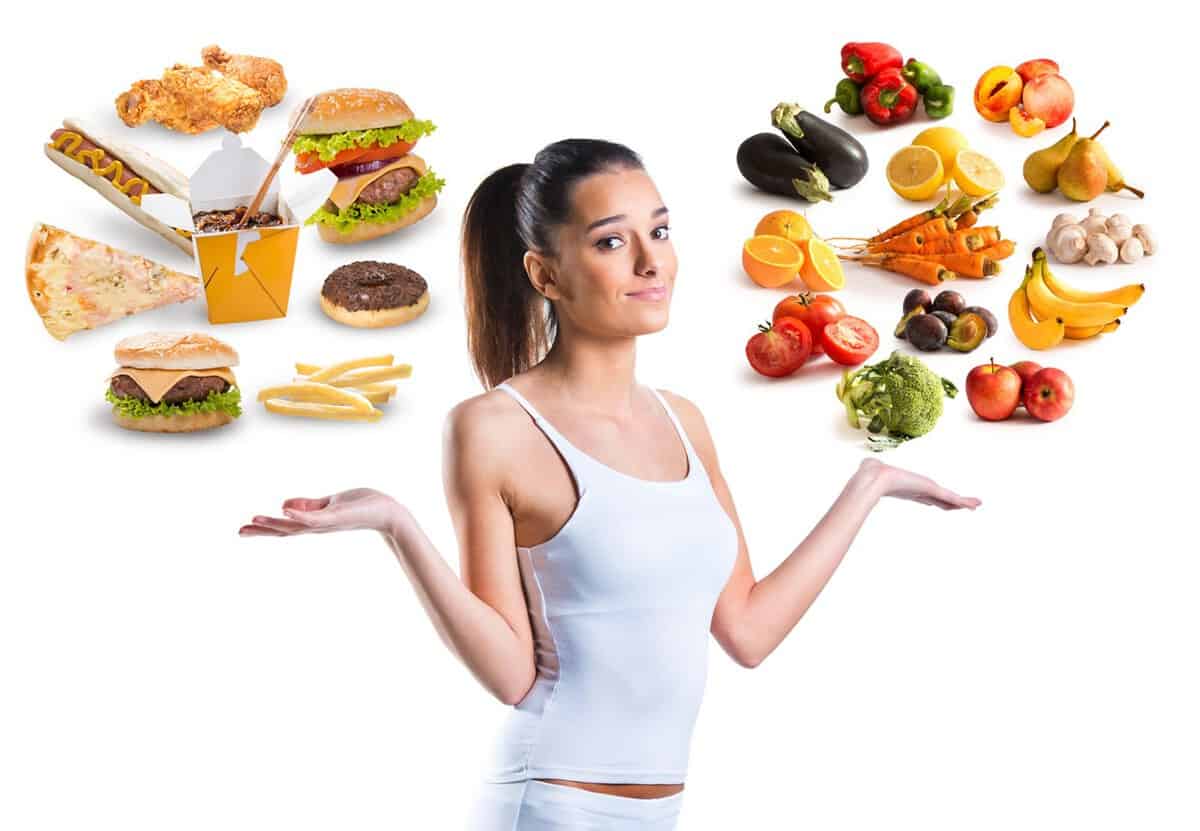
There are many terms that are misleading in the food advertising industry today. Think of how many times you see healthy phrases plastered all over food containers. Don’t allow yourself to be swayed by these words of trickery, none of these catchphrases mean ‘healthy food’ inherently – you have to read the labels.
Let’s take a look at some of the most common attempts to convince consumers a food is healthy when perhaps it’s really not.
There is still a big misconception that a healthy diet – and a healthy lifestyle – is expensive. For many, buying organic food, high-end supplements, and maintaining a gym membership is not always an option. Students in particular often struggle with maintaining a healthy lifestyle, despite the fact that students diet healthy on a budget all over the world.
Students tend to stay up late and engage in activities that are not necessarily good for the body and mind. The same problems are seen among online students, especially since they have more freedom with their time.
Whether you’re pursuing your bachelor’s degree or taking an online degree while working a full-time job, these healthy diet tips will help you maintain a healthy body on a budget.
The Paleo diet is intended to be similar to what our ancestors and forefathers ate thousands of years in the past. When you start a paleo diet you can be assured you are eating like your ancestors, even if you don’t know exactly who they are. Although it is hard to know exactly what our predecessors ate in various regions of the world, scholars assume their diets were mostly up of complete foods.
The hunter-gatherers apparently had a considerably lower incidence of lifestyle illnesses such as obesity, and heart diseases because they followed a whole-food-based diet and lived physically active lifestyles. As a matter of fact, multiple studies demonstrate that this diet can result in considerable weight loss (without calorie tracking) and significant health advantages.
We provide you with a basic introduction to the paleo diet, including a meal plan and other important information.
If you think that lighting heavy weights on its own is enough to build muscle and maintain progress, you couldn’t be more wrong! A successful body builder diet is crucial, some would say 75% responsible, for gaining/maintaining muscle while also losing fat.
Building muscle is hard, and maintaining your progress is even harder.
It’s not enough to just go to the gym a few times a week. You also need to make sure you have the right body builder diet if you want to see results.
But don’t worry. Keep reading because this article will teach you everything you need to know about bodybuilding nutrition so that you can finally achieve the physique you’ve always wanted.
Vegetarian diets are becoming increasingly popular. The reasons to start a vegetarian diet vary, but they all have health benefits, such as lowering your risk of heart disease, diabetes, and several cancers. Research studies estimate that vegetarians account for up to 18% of the world population.
However, some vegans eat far too many processed meals, which can be heavy in calories, fat, sugar, and salt. Furthermore, they may not consume enough fruits, whole grains, vegetables, and calcium-rich meals, depriving themselves of the minerals they supply.
A vegetarian diet, on the other hand, may suit the needs of individuals of all ages, including toddlers, teens, and pregnant or breastfeeding women, with a little preparation. The goal is to be aware of your nutritional requirements so that you can develop a diet to satisfy them.
The Mediterranean diet may be the world’s healthiest diet. It is a manner of eating that stresses fruits, vegetables, whole grains, and heart-healthy fats rather than a rigorous meal plan, as well as frequent physical exercise. We’ve laid out the ground rules for you to start a Mediterranean diet, whether you want to make tiny modifications or completely revamp your eating habits.
Let’s take a look at the basic guidelines for starting a Mediterranean diet.
Intermittent fasting (IF) is a highly popular health trend. It’s claimed to reduce weight, improve metabolism, and even boost lifespan. Each of the most popular intermittent fasting methods involves a way of eating using regular short-term fasts. These fasts help you consume fewer calories and optimize hormones related to weight management. If your goal is to improve your eating habits this type of diet strategy could help you significantly.
Let’s take a look at 5 popular intermittent fasting methods and the benefits to your weight loss and your health.













 \
\

