


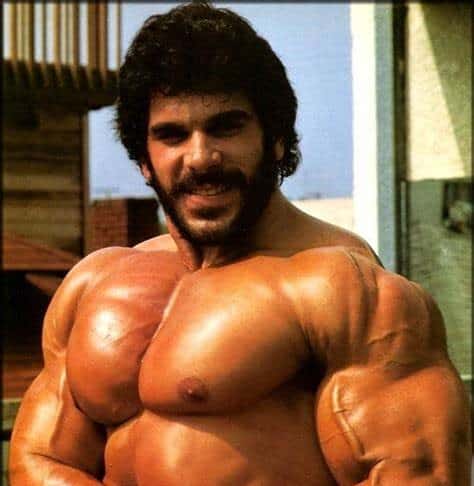
Bench presses and curls are two of the first exercises that are learned by new weight lifters. For men, the chest or “pecs” (short for pectorals) are second only to the biceps as the top show muscles in teenagers and young adults. This list of 5 of the best chest exercise will go a long way in building that initial base.
For women, the chest is even more important. Keeping well-built pecs can be useful in maintaining a solid, perky appearance of the breasts.
Serious fitness enthusiasts and athletes know that the pecs are involved in one of the main powerlifting exercises, the bench press. The bench press is one of three exercises, including squats and deadlifts, in a standard big 3 powerlifting competition. For this reason, it is always important for powerlifters to increase their chest strength.
Therefore it seems to me that everyone has a reason to train their chest, including men, women, athletes, bodybuilders, powerlifters, strongmen… everyone; and here are the top 5 best chest exercises you should use.
How to Get a Big Chest
Training to build a strong back and triceps is just as important to building a big chest, as chest exercises are. So don’t forget to read up about the top 5 best back exercises and the top 5 best triceps exercises. One thing is for sure, without strong triceps, you will never have a big bench.
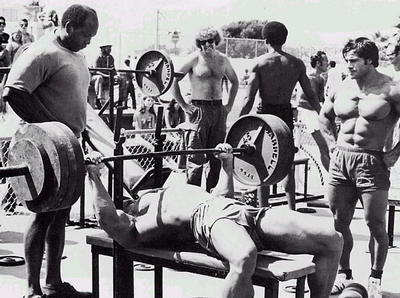
Also, you must always train your lower body in order for your upper body to grow. For the lower body, I recommend the top 5 best leg exercises and the top 5 best hamstring exercises. Training your whole body with a full-body workout routine is one sure way to make sure everything grows or gets toned, depending on your goals.
Now we must examine how the pecs work so that we can better target them for growth.
Anatomy of the Chest
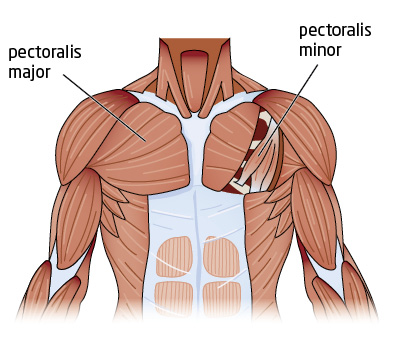
The pectoralis major (aka pecs) is located on the front of the rib cage.
The pecs attach to the humerus near the shoulder joint and originate on the breastbone in the center of the chest.
The fibers of the pec run like a fan across the chest. Their fan-like structure allows the humerus to move in a variety of planes across the body.
The pectoralis minor is located underneath the pectoralis major, attaching to the coracoid process of the scapula and originating on the middle ribs.
Functions of the Chest
The function of the pectoralis major is to bring the humerus across the chest. A flye movement is the best example of this action, although the true function of the pecs would be more of a combination of the first 1/2 of a chest press followed by the second half 1/2 of a flye, ending with the palms facing each other at the body’s midline.
The pectoralis minor serves to move the shoulder area forward. This can be seen by shrugging your shoulder forward.
The Top 5 Best Chest Exercises
1. Barbell Bench Press
The king of all chest exercises. The flat barbell bench press has long been the standard for strength prowess. If you could only choose 3 exercises to create a full-body workout, the flat barbell bench press would have to be on the list. This is also the same exercise used in any big 3 powerlifting competition. You will find people use a large number of variations of the flat barbell bench press. A close grip flat barbell bench press is used to focus more on the triceps, while a wide grip flat barbell bench press is a standard pec builder. A middle grip is used most successfully to combine the strength of the triceps, pecs, and shoulders for a maximal effort bench press.
To set up: find a flat standard Olympic bench with a standard 45 lb barbell. Laying down flat on the bench, you want the soles of your feet to touch the floor. This is because we want a solid base on which to use our legs to help drive the weight up. You want your butt, your upper back, and your head to be touching the bench at all times.
You should also set up so that when you unrack the bar it will drop almost directly down to your chest; in other words, you don’t want to be doing a barbell pull-over once you unrack the bar from the bench, as this will create unnecessary fatigue and increase the possibility for a shoulder injury.
All that being said, put a couple of plates on that bar and let’s start benching!
To bench: with a medium grip flat bench press, you don’t want your elbows tucked in nor flared out. They should naturally fall at a 45-degree position away from your body, locked in against your lats for stabilization at the bottom of the rep. From the unracked position, you will lower the weight slowly so that the bar just lightly touches your nipple area; do not bounce. Using explosive chest strength you should drive the bar through the mid-way point of the rep, which is usually a sticking point. Once you are past the mid-way point you will increase your triceps activation to press and lockout the weight. When I say lockout, I do not mean to lock the elbows out 100%, instead, they should be locked out about 95% so that the elbow is completely straight. The best way I have found to maximize triceps activation is to focus on breaking the bar in half away from you. Think about holding a stick out straight in front of your body with palms down, then break that stick away from you by snapping both forearms and wrists away from the midline of the body. Clearly, the bar is not actually going to break, but you can use this concept for maximum triceps activation.
Variations: wide grip, medium grip, narrow grip; board press, floor press, pin press. The incline press is great! The incline bench press is often used to target the upper pecs, which is vital for developing a full overall chest with deep cuts between the upper and lower muscles. I always work a flat incline dumbbell press into my workout. If you have studied the anatomy of the pectoralis, you will notice that there is indeed an upper (pec minor) and a mid/lower (pec major) muscle. Your pecs will really have that powerful bodybuilding look once you have mastered various forms of flat and incline bench, and have developed the cut between the two muscles. That, my friend, is good stuff.
Controversial point #1: The decline bench press is mistakenly used to target the “lower” pecs, and I have a bone to pick with this notion. There is no “lower” pec muscle, there is only the pectoralis minor (upper pec) and pectoralis major (mid/lower pec). But just because there is no specific lower pec to target, doesn’t mean you should avoid decline benching altogether.
\People are most often stronger on the decline bench because the range of motion is shorter, which eliminates weakness at the bottom of the press, because you are better able to recruit your triceps and lats throughout the entire exercise, and because you use less of your weaker upper pec and more of the bigger, stronger pectoralis major. While I haven’t done a decline bench press in 8 years or more, I do intend to start working them into my workout once in a while. The close grip decline bench for focusing on the triceps is also a great exercise. You can read about the 5 best triceps exercises for more information.
Video Demonstration
My only problem with the following video is that he lifts his butt off the bench during each rep. I only show you this because it demonstrates the concept of driving with your feet and legs. It is possible to drive with your feet and legs while simultaneously keeping your ass on the bench.
2. Dumbbell Bench Press
The flat dumbbell bench press is like core chest exercise #2. This is one awesome way to make sure you don’t have any strength imbalances between the two sides of your body. The dumbbell bench also more closely follows the intended function of the pecs by not only pressing but also by moving the weight toward the midline of your body.
To set up: find a flat bench that allows your feet to touch the floor. You will once again want your butt, your upper back, and your head to be touching the bench at all times.
Most of the time I grab the dumbbells I want, stand with the bench about 6 inches behind me, and sit down slowly while transitioning the flat side of each dumbbell to rest on my thigh. From this position, I can lay back, rock the dumbbells up to shoulder height, and press up the first rep all in one fluid motion. Without mastering this maneuver you will forever have people handing you the weight or spotting you on the first rep. At this point, you have already completed half of your first rep.
To bench: lower the weight to finish your first rep, then at the bottom of the rep, which for me is when the dumbbells lightly touch my shoulders, I use explosive force in my chest and shoulders to power the weight past the mid-way point, and conclude the rep by using my triceps to lock it out. Again, only a 95% lock, not straight.
Many people do not advocate a full range of motion on a heavy dumbbell bench press. They would say stop short of letting the weight touch your shoulders. In fact, many would say only bring the weight down until your upper and lower arms form a 90-degree angle. I completely disagree with this. My shoulders are pretty strong and healthy, and I’ve always lowered the weight to the top of each shoulder.
Variations: incline, decline, flat. It is possible to use a wide, medium, close grip on your flat dumbbell bench, but I prefer to focus on the single medium grip motion so as not to compromise the integrity of my shoulders and rotator cuffs. Also, I think the decline dumbbell bench press is bogus, but probably more useful than the decline barbell bench press. I still don’t do it.
I thought this would be the perfect opportunity to put up the infamous Ronnie Coleman dumbbell pressing 200 lbs in each hand.
3. Explosive Push-ups
You have to admit, aside from using the smith machine, it’s pretty hard to do any maximally explosive benching. Sure, you can use a Westside Barbell style dynamic effort day in which you use 45-50% of your 1 rep max for 9 sets of 2 reps. Read about the Louie Simmons Westside Barbell theories on dynamic effort and speed lifting on the Westside Barbell Articles page. If you are a strength athlete or powerlifter and you haven’t yet read every article on that page, do it now and come back to Project Swole later.
In any case, this exercise will be used to develop explosive power in your chest, shoulders, and triceps. The two main methods I recommend are clapping push-ups and plyometric push ups where you jump your hands up onto an object for each rep. For the purpose of this article, we will talk about plyo push ups.
To set up: choose to do push-ups either on your palms or on your knuckles. As you lay on the floor, your body should be in a straight line, touching the floor only at the hands and toes. If you are female and struggle with push ups, you may start by doing push ups on your knees, but within a month or two you must practice and master doing push ups from your toes.
Opinions differ as to how to position your head during push ups. When you are doing explosive push ups by jumping up onto objects, you won’t have much choice but to look down so that you aren’t missing your target. Ideally, you would look up and forward while doing push-ups.
Your hands should be placed 2-3 inches outside of your shoulder width. The closer your hands, the more you will activate your triceps. Since this is for explosive power in the chest, you will choose a wider hand position.
Select two large hardcover books, weight plates, or blocks that are at least one inch thick. Place one of these objects directly beside each hand. At the beginning of each rep, your hands will be on the floor. At the end of each rep, your hands will be up on the blocks. As you get better at this exercise you will want to increase the height of the blocks.
To push up: the starting position is as low to the ground as possible without touching your chest, belly, legs, or chin. The initial movement should be to drive your body off the floor with as much force as you can muster. At the top of the rep, stopping before you fully extend your elbows, the last bit of effort should be a 100% maximal force that will propel your body up into the air, allowing you to execute a clap or to jump your hands up onto the blocks.
After a clap, you will land in the original position and descend in preparation for the next rep.
After a plyo push up you can choose to either:
- Walk your hands back down to the starting position and descend in preparation for the next rep.
- Descend down into another rep and execute another plyo push-up, jumping back down to the original starting position. Then descend in preparation for the next rep.
Variations: clapping, hopping, palms, knuckles, variable height boxes, alternating arms, incline, decline, super-wide (more chest), narrow (more triceps), legs elevated.
Here is one of the best plyo push-up videos I could find on YouTube.
Just so you can see how many examples of plyometric push-ups there are, here is an example of a girl executing some mighty fine lateral plyo push-ups. This movement can be nerfed a bit for beginners by taking the leg movement away and simply alternating side-to-side.
4. Chest Dips
Similar to the triceps version, chest dips closely resemble what you would be trying to accomplish with decline pressing except that you are focusing on building triceps strength for chest pressing rather than trying to work the phantom ‘lower pecs’. If you have bad shoulders consider skipping this exercise or work at it slowly by shallow dipping rather than deep dipping.
To set up: find yourself a dip station. Grab a weighted belt and some plates or a dumbbell if you need to add weight for your dips.
To dip: start at the top with your arms almost fully extended. The goal is to lean slightly forward in order to keep tension more so on the pecs than the triceps. Now dip down until your upper arms are parallel to the floor, or lower if it doesn’t bother your shoulders. Do not bounce at the bottom, instead pause for half a second. Squeeze your pecs and use your triceps to push yourself back to the top. Never lock your elbows.
Variations: assisted, bodyweight, weighted. You will also find dipping stations with adjustable handles so that you can use a wider or narrower hand position. Keep your body completely upright to focus on the triceps instead of the chest.
I could not find a chest dips video on YouTube that I approve of, so here’s one with a guy who is clearly going super heavy. Aside from locking out his elbows randomly throughout his sets, this is a pretty good demonstration of the chest dip.
5. Dumbbell Flyes
How important are flyes? In my opinion not very important, but I needed a fifth exercise for this list. Honestly, I would rather fill up my chest workout with flat and incline benching and dumbbell pressing, and end off with some heavy weighted chest dips. Some people insist flyes are the key to growth and flexibility. I will admit flyes do have a purpose when it comes to bodybuilding. There are many variations of flyes, including dumbbells, cables, and any angular position attained by either using an adjustable incline bench or by standing and leaning over with the cables.
I highly recommend that if you are not into this for bodybuilding purposes, you might want to consider dumbbells rather than cable flyes.
Most importantly, rather than doing dumbbell flyes at the end of your chest workout, choose dumbbell flyes as a recovery exercise a day or two after a heavy chest workout. This will allow you to stimulate your sore chest muscles with a free-weight exercise that is dissimilar to what you used to tear them up in the first place. You will be able to get a good stretch and increase blood flow to all areas of the pec.
To set up: for dumbbell flyes, you want to assume an identical position to either the flat or incline dumbbell bench press; one dumbbell in each hand. You want to start the exercise from the top position rather than with your arms out to the sides. Start by pressing the weights straight overhead.
To flye: once the weights are fully extended overhead, keep your arms straight except for a very small bend at the elbow. Lower the weights out to your sides with each arm at the same time. At the bottom position, your arms should be parallel to the floor. Pause for just half a second and rapidly bring the weights back to the top position, still without moving your elbows.
At the top position of this exercise, you should find that your arms are not straight up and down, perpendicular to the floor. This would only remove the tension from the muscles. Instead, stop 15 degrees short of straight overhead.
This entire motion should be controlled by your chest and front delts.
If you don’t believe me, take it from The Oak himself!
Honorable mentions: hammer strength chest press machine, flat or incline; machine flyes; cable flyes.
Controversial point #2: many people say they do bent arm dumbbell pull-overs to work the chest. I don’t see how anything about dumbbell pullovers has anything to do with the pecs. I can see them working the triceps slightly, lats, and serratus. The exercise itself is great fun; I love dumbbell pull-overs. Unfortunately, they aren’t that effective for working any specific muscle. I might add them to the end of a back workout just for fun, but I would never add them to a chest workout on purpose and they definitely have no place in any top 5 list except maybe top 5 best exercises for fun, or top 5 best serratus exercises.
Here is what a dumbbell pull-over looks like, although I’m not sure why this guy is using such a light weight.
Full Body Workout Integration
To integrate these exercises into a full body workout program, you should choose either barbell or dumbbell bench press as your main chest exercise (flat or incline). Follow it up with a leg or back exercise. Then choose either dips or flyes superset with something like calves or abs.
If you chose a flat bench press, you should choose incline flyes; if you chose an incline bench press, you should choose flat flyes. This will allow you to lift the maximal weight on the compound movement and hit the pecs from a secondary angle, while also training a second muscle group in an assistance fashion (flyes for shoulders, chest dips for triceps).
On a subsequent full-body workout day you should choose plyo push ups as the only chest exercise for the day. Focus on completing 10 sets of 5 reps, or 5 sets of as many as you can complete in each set. The goal is to focus only on explosive chest training for that day. Once you start to slow down, or if you miss a jump or a clap, the set is over. You should never train slowly or with a compromised form on an explosive exercise.
Standard Split Workout Integration
To integrate these exercises into a training program that splits the body amongst different days, you can do a flat bench press followed by an incline bench press on chest day, and follow those up with either flyes or dips. I recommend doing one barbell and one dumbbell movement, but choosing two of the same is also acceptable.
As with full body training, explosive or speed training should be done on a different day from strength training. Vary your workout strategies throughout the week to keep things fun and exciting, while allowing for rest and recovery.
Final Thoughts
Focusing on your chest is a significant effort. If you wish to make superior gains in chest training, you should put your squat and deadlift progress on maintenance until you complete a 4-6 week chest prioritization phase. Don’t get me wrong, you can still choose to focus on everything at once and make great gains, but to prioritize any one muscle group you should put everything else on hold.
Tags: chest, chest training, training



 \
\


Hi,
I have the left side chest bigger than the right side, how can I make both same size.
Thanks
Try using primarily dumbbells in your chest workouts for a month or two, and initially try doing a couple of extra drop-set reps on the weaker side.
Great guide for getting tips on body weight exercises too… Thanks! 🙂
Great info! And it’s really fantastic that you highlight calisthenics and bodyweight exercises like dips and push-ups! Compound movements are essential for getting a correct and a complete workout!
Again! Great guide! Thank you… 😉
Thanks, cleared up a lot of misnomers.
these exercises(floor press,pin press,push ups{hopping,palms,knuckles,variable height boxes,alternatingb arms,incline,decline,legs elevated})how can be in gym is easy to do this?
Find great Pec Workouts!…
[…]The Top 5 Best Chest Exercises | Project Swole[…]…
nice….
good one
If anyone really wants a good chest workout, please incorporate the Purvis Press.
Among of these workouts, i prefer to practice Dumbbell flyes given the fact that it is much easier to perform and it doesnt require much of strength from my point of view.
Simon
I had this happen to me before.. The way I solved it. Was I stuck my chest out more. An also good posture
Hi
Do anyone know what can be wrong with me :D?
I explain now
Basicly when I doing chest workout after a session I can’t feel any difference in my pecs the thing is that happened secend time and I have no idea why? Every time I was doing chest workout I could feel my pecs strong and hard and now I can’t
the exercizes are awesome and I can see results coming out of them. are there any youtube videos where the perfect form of these exercizes is shown????
I am currently on the 6th workout day of the werewolf routine, and i already see results. I take a protein shake after every workout. How great is optimum nutrition gold stantard whey protein compared to your average walmart brand?
Hahaha! ON Gold Standard is whey better (pun intended) than the Walmart brand. Do your digestive system a favor and stick with ON.
haha Alright thanks steve
i meant to say long arms ,sorry. plus do u think once i get older (somewhere around 16) that i will be able to bring the bar down and make it touch my chest?
If you are intent on it, I don’t see any reason why you can’t bring the bar down to touch your chest now. Decrease the weight on the bar so that your range of motion can touch your chest. Practice that form until you are good at it.
Im only 13. When i benchpress, i can’t make the bar touch my chest. It feels like my shoulders will pop out. Should I try it anyways? Right now, i can bench 140×8. Should i use less weight? I can’t even make the 45lb bar touch my chest.
I really can’t comment on that because I don’t know what your physiology or technique are like. I’ve known several really strong dudes who never touch their chest when they bench, but if you’re not benching at least 3 plates on a side and don’t touch your chest with the bar, then I guarantee everyone in the gym secretly thinks you’re a puss. You might try keeping your elbows in more and bring your grip in. That might help you to take your shoulders out of the movement, focusing more on chest, triceps, and back to support and reverse the negative movement. And yes, probably use less weight. Start down at a weight that allows the bar to touch your chest, unless of course you really do throw your shoulders out when you bench deep, in that case you’ll need to work within your own limitations.
i bring the bar down until my arms are 90 degrees. according to the trainer, i just have short arms and that i shouldn’t try to make the bar touch my chest? plus this video basically says the same thing:
https://www.youtube.com/watch?v=nDoPC3XGBYs&feature=related
The ageless debate of ‘how low should I go’ can be applied to many exercises, including squat, good mornings, military press, bench press, and more. The best answer depends on a variety of factors including injury history, physiology, goals, and preferences. I’ve known several people who only bench to 90 degrees, but I’ve known hundreds or even thousands who touch and go. Don’t use the excuse that you have short arms though, because it’s the guys with shorter arms who should touch and go, as their elbows are less likely to drop below their shoulders, especially if they are benching with a medium grip and powerlifting style (keeping the elbows closer to the body). In my experience it’s the guys with longer arms who tend to stop short, and if they (and you) feel they have a good reason to use a shorter ROM, then I am not one to criticize. Do what works best for you and keep yourself free of injury.
In the werewolf training routine, does a and b mean its a superset?
Yes, a superset.
hey man just started lifting, I only got a bench right now though. Whats a good workout for my chest for a day. (flat bench,incline??)
Flat bench, incline bench, decline plyo push ups, skullcrushers.
Hey steve,
Say tomorrow is a bicep and chest day. How many bicep excersizes and chest excersizes should i do?
3 for chest, 2 for biceps.
Pretty solid list. I disagree with you on the fly’s though. Flys are the single best exercise for the pec muscles. Doesn’t have the glamour of the bench press, but if you want to work you chest and your chest only, get going on flys.
Fair enough Sean. I admit flyes have their place.
Hi Mr. Steve,
I’m so feel amazing when found your blog. It’s very completely resource that I need. Many exercise type have been posted here.
Thanks
Hello Steve,
I have a problem. Whenever I finish with chest and biceps they really get too big. I mean they get fully pumped and even my friends get shocked. But after 2 days If I don’t go to gym my whole body, chest, biceps and everything just flew away. It look like that I have never been to gym in my whole life. Can you suggest something for this.
Thank you
You need to develop some strength. Really put some time into powerlifting for a while and your muscle density will increase. This will keep you looking big 24×7.
Hello Steve,
Thank you very much for your consideration. what do you actually mean by putting some time into powerlifting for a while. can you please be more specific? I have just started werewolf routine. Do you think this is a good idea now? Or I shall try it later after getting finished with ur powerlifitng idea..
thank you
Honestly I think you should use the Werewolf routine, either for muscle or for strength, although I don’t have a ton of feedback on the strength routine like I have for the muscle routine. Another option would be to try a 5×5 routine for a couple months to focus solely on strength. Some people, including myself, are getting great strength gains off the Werewolf Muscle routine, so there’s no harm in trying.
hi sir . i have a question . i got 5months of taking fitness exercise.
I’m satisfy with my back exercise and other body parts .. but i have a questions about chest building because in 5 months i have been stock in 25 – 30 lbs .. though i insist to increase the weight plates yet still i can’t . I’m stock with about 1 – 1 and half months i guess.. pls help me sir … i’m begging for your reply … i want to increase plates to build my chest .. it’s too poor 🙁
I feel like you might need to eat more and train differently. I don’t know a thing about your diet or workout routine, so I can’t give you specific advice. Eat 500 calories more each day, most of it protein, and use the Werewolf Training to Gain Muscle workout for 3 months. Then let me know about your progress.
how can i get a strong shoulders and strong legs….my age is 23 and pursuing M.Sc(HS)-I from Panjab University, chandigarh, punjab (INDIA)….
You can get all the info by reading this site. Try Werewolf Training or put together your own routines using the Top 5 Best Exercises posts.
Hi,
I have the left side chest bigger than the right side, how can I make both same size.
Thks
Use dumbbells for your benching at least once a week for about 3 months, specifically flat dumbbell benching. Don’t ever do more reps with the smaller side, but after your last set consider going to one of the chest press machines, and toss in one set of one-sided chest presses for the smaller/weaker side. Let me know how it goes.
I wan’t to know how to get my chest bigger. I know how to get stronger, but size did not come with it. I’m 5’8 148 and I lifted 205 and it suprised a lot of people because i’m not a big guy. My arms are great but my chest isn’t. On chest days I mix it up by doing bench, incline, flys than dips to finish it off, or ill bench, dumbell, decline bench, and then chest press machine to finish it off. i noticed some results. also after my chest ill do another muscle but those are no problem right now. for bench i either do 1 set of 12, 1 set 8, 1 set 6, 1 set 4, 1 set 2 1 set 10 or 1 set 15, 3 sets 6, 1 set 20. what should i fix up?
Switch everything up and only use sets of 8-12 for 2 months. Try this:
Week 1 – Flat barbell 3×8, incline dumbbell 3×10; 3 days later – Flat barbell 3×12
Week 2 – Flat dumbbell 3×8, incline barbell 3×10; 3 days later – Flat dumbbell 3×12
Week 3 – Flat barbell 3×10, incline dumbbell 3×12; 3 days later – Incline dumbbell 3×8
Week 4 – Flat dumbbell 3×10, incline barbell 3×12; 3 days later – Incline barbell 3×8
repeat
Afterwards, switch back to a 3×5 or 5×5 routine for 2 months. No need to do sets of 20, 15, or 2 if you’re trying to add size. Sets of 5 or 6 could be used, but I think you just need to train for hypertrophy for 8 weeks. Still always try to increase your weight at each workout.
Thank you so much for the tips. I’m just recovering back from injury and this is so helpful. Appreciate it. Cheers
Hi,
Do you have a preference to the order that chest exercises are done?, I notice that many people like to finish with dips, I also ask because the fly pumps my biceps more than my triceps, should i put it in my pull day of a push/pull/leg split or is that overtraining ?
Thanks
I’m not sure why flyes are pumping your bis or your tris. They are mostly used to build mass in the chest and front delts, and some people think they help ‘shape’ the inner pec striations, but I think that’s a bunch of malarkey. You should flye on chest day, which would be push.
Thanks for the reply, obviously i meant along with the chest/delts getting exhausted, the bi’s are completely pumped also when doing fly’s, Thats just a fact !, Its not uncommon for pro’s tearing biceps while doing flyes, hence my question, should it go on pull day along with back/trap/hams/bi’s because i’m worried i’m overtraining my bi’s by having them on “push” day. Great page by the way 🙂
Ok, im hittin a different muscle each day, also doing about a half hour of cardio a day. I’m literally doing at least seven workouts per muscle, a lot of times more, really mixing up my reps and weight and such. Somedays i’ll do high reps low weight, others high weight low reps.. should i stick to one or the other? I have had really good results in the first 4 months or so but now i seem to be seeing a lot less results. I havn’t had any injuries or anything but is there such thing as overworking the muscle or am i ok doing what im doing?
Sounds like you might be overtraining with “at least seven workouts per muscle” and the extra cardio. Consider dialing it down a notch and combining exercises in each workout so that you are only doing 3 exercises for large muscle groups and 2 exercises for small muscle groups. Also, what kind of cardio are you doing? Endurance or high intensity? Endurance cardio is not helpful for muscle gains.
i feel limited as far as chest workouts go because i try to isolate it from my triceps since i work my arms on a different day. it seems like flys are the only exercise that completely isolate my pecs, can you give me any other ideas on how to isolate my pecs?
How can I effectivly exercise my lower chest to eliminate man boobs?
Sadly, you can’t. You’ll need to work on your upper chest to build up the size of those muscles, so you’ll offset the size of the moobs. You’ll also need to work your back, which will help you keep proper poster so that your chest will droop less. The ultimate solution to moobs is either surgery or fat loss. No amount of strategic weight lifting can fix them.
Hey steve I was just wondering when should I add plyometrics into my workout routine? everyother day? And some say jump squats are bad for the knees, what do you think?
Plyos can be used every 2 or 3 days. I’ve never heard of anyone getting hurt from jump squats. Just keep the weight light, focus on speed and power.
I been to the gym for a year but see no improvement
Try working out once you get there.
ive beendoing everything for chest and correct form and every rep possible too. my chest wont get any stronger. and i want more power in my triceps. what should i do?
Close grip bench press, dips, pin press, floor press, rack lockouts.
thanks steve for the info and the videos, hate to be critic of such a great site, especially when it is free info, but i would probably change Arnold’s video, and add a video that focus more in the exercise and less on Arnold’s face.
Thanks for the feedback Ed. I’ll look into it.
I’m 15 and want to bulk up do you know any routines i could do to get bigger quick
Werewolf Training.
i ave man boobs .. what should i do for firming them into toned chest….
You need to train your whole body, especially the upper chest and back. You also need to focus on losing fat, as fat loss is the only real cure for man boobs short of surgery.
Dear Steve,
Hi, Sir My hieght is 5’5 and i have a good phsique but i have a cery small chest and my back is very week .
Can u give me some tips abt how to improve Chest and Back , i will be highly thankful to u
Follow a routine like Werewolf Training or use the exercises listed on this site as the top exercises for each muscle group.
Hi Steve,
i’m 16 years old and I weigh 140 pounds. ive been workingout for about 6 months and ive been at the same weight ever since but i have gotten stronger so i was wondering how i can add some muscle weight one me and also i was wondering how can i get a good definition on the chest like the sides and how it comes out and the shape and the middle of it and how it pops out, like what excersises would you reccomend.
also when i was young i was a chubby fat kid then i randomly grew taller and lost alot of weight now i have just some access skin do you know if it goes away by itself because ive been working on my abs everyday and these days ive been doing weight ab workouts and like you can see the abs but i want that tightness on it so i was wondering if you knew what i could do.
Thank you. Random Teenager From North Africa 🙂
Hi Steve,
Thanks very much for this post -it’s very helpful.
I’ve just started training and have the same problem as Mike above. If you could suggest something that would be great.
Thanks & best regards,
Richard
Hey Steve,
Firstly, let me say this site is awesome. Thanks.
I also like the fact that you respond on this page … set a decent communication vibe, well done!
I was a victim of tapeworm, discovered after two years of infection and a couple of thousand bucks later, and have been in slow recovery for the past three years. When I say recovery, I am 36 years old, 180cm tall and my weight dropped to 49kg!!
What I never knew whilst the parasite was in full swing was that the more I over-trained to gain weight, and the more supplements I took, the stronger the parasite was getting, leaving me with almost zero immune defence, and a serious deficiency in essential minerals and vitamins.
Nonetheless, three days after it was discovered and treated for, a 360º turnaround was effected, but I simply couldn’t return to training as I was too brittle from vitamin deficiency, (I had cracked a rib from doing weighted crunches … my own obloquies caused the pressure and ‘snap’, it cracked), and started home exercises instead.
Now, three years later I have gained 26kg (Inow weigh 75kg) of lean body mass (after tapeworm, you keep a very strict analysis of your body in case of re-infection), and have maintained an 11% body fat. I would say I have recovered amicably, and am really proud of my achievements, but would like some advice on specifically pectoral training.
I have noticed a “dimple effect”, or flat spot the size of the palm of your hand, in the upper centre (left and right) of the pec. I have noticeable separation between upper and side/bottom of the pectoral, which have developed well, but the inner top corners are just not getting attention, and I don’t know how to attack this problem.
Regards,
Mike
hey steve my lower chest is quite weak…wht should i do?
Flat barbell and dumbbell press. Heavy.
Hey Steve,
My pecs are coming along pretty well, but I’m lacking definition and mass in the middle of my chest. After doing some research, cable crossovers supposedly help the middle chest.
How do you feel about crossovers?
Thanks!
Crossovers are OK. More of a bodybuilding exercise. I think dumbbell flyes and regular dumbbell bench press can do the same thing.
Hey Steve.
I retired from the Army in 2007 and went from 160 LBS to 205. I’m down 15 LBS so far but I want to lose more and gain muscle. Any helpful hints. I dropped my calories to 2000 a day and run for 45 mins a day and lift for 45-60 mins 6 days a week.
Thanks,
John
I am a woman & I am looking for a chest exercise that will work my chest right above my boob & under my armpit. I do all the above exercises & more but for some reason when I flex there is a funky cut under my armpit and my boobs have that sloping look. What can I do to work that part of my chest??
Flat dumbbell presses should work your over-boob and armpit area. Incline dumbbell presses will work your upper chest, which should help lift everything up. Toss in some sets of barbell presses and push-ups once in a while to change it up.
Hey Steve,
I’m going to the gym to lose wieght and i’m pretty overwieght but losing 20lbs so far…any advice on what i should do to tighten my belly while losing weight?
Check the top 10 best ab exercises articles. Choose an upper, lower, and oblique (or rotational) exercise. Do 3 sets of each exercise every other day.
How many diffrent chest lifts schould you do per work out. im trying to get a massive chest and shoulders.
Only one or two, but train chest every 48-72 hours.
Hi Steve. My Goal is bench 500 Lbs. Currently pushing 420 Legal Lift raw. Chest work out consists of 1 warm up set of 135 for 20 reps. 1 set of 10 reps @ 315. 3 sets of 3 at 405. then 2 or 3 sets of 10 at 315. then Machine Pec Flys to finish.
Program is Day 1 Chest and Bi’s / Day 2 Shoulders and Traps / Day 3 Back and Tri’s / Day 4 Legs
Two rest days that vary.
Suppliments are Noxipro Pre-work out. Beast SuperTest and Isopure Protein.
What are your recommendations to help get to 500?
Hey Steve….
I was wondering what was the best chest excercises to better define/workout your inner chest. Thanks
I like flat and incline dumbbell presses, but some people swear by dumbbell and cable flyes.
how many exercises i should involve in my chest routine? Is it correct to take all the sets of barbell as well as dumbell(flat, incline and decline) together???
and also the gapping between the chest?
please help me……
Hi Steve !
I’m 5’10, 70 kgs, i work every muscle group once a week and would like to increase my muscle mass ,,, until now i do 3 sets of 10-12 reps of 3 exercises per muscle group … enough ?
Do drop sets. 6,8,10.
hi steve,i have good sized chest but the only problem is my left and right chest are not getting divided into two by a central line. Suggest some exercise so that i can get them divided.pls reply
It could be that genetically you don’t have the kind of division between your pecs that you are looking for. More likely, considering that you claim to have a “good sized chest”, you have bodyfat covering that area. My recommendation is to lose fat and integrate heavy dumbbell bench pressing into your chest routine. Some people will recommend cable flyes, but I think the dumbbell pressing will be just fine.
hi steve my upper chest is quite weak my weight is 77 kg..
what excersise should i do for upper…
Incline bench press with a barbell or dumbbells. Overhead press. Decline push ups (with feet elevated).
hey steve why u r nt replying to me?
male 24 age my weight 47 kg and height 170 cm and very small size chest how to improve all of weight and chest pls say immm………..
Lift w8 everyday.
hi steve..can u give me some details about glutamine..how it works?
m quite confuse abt it..
hi
am 5.8 feet height and 62kg weight, am doing gym also i want to increase my weight and improve muscles so please give me suggestion.
thanks
Try the Werewolf Training routine.
Aside from these 5 chest exercises, do you have any other tips to get rid of “man boobs” especially for someone who is by no means overweight and is otherwise completely healthy? Thanks!
Losing ‘man boobs’ is really just all about losing fat. Once you drop fat, the boobs will shrink. This applies to women as well.
which all chest exercises should i do if i have man boobs except for the cardio,i have been going to gym since past 4 months and my man boobs are getting more noticible, right now i am doing incline bench,flat dumbell press,flat flyes,pullover and decline push ups which i do before all this.
so please suggest something for me, i am really fed up of this shit
and flat bench press also
You need to lose fat and that’s the only thing that is going to work for you.
You need to do full body exercise to burn fat. Do some squats.
If you don’t like cardio, try doing snatches or clean and press. They are both great workouts and if you focus on speed and high reps with moderate weight, then you will see results in your entire body. Look them up on google to get the right form. Also try doing Decline dumbell or barbell press and throw in some decline flys. This will help draw the chest tighter and give the pecs more form.
Chest has always been my weak point. But it was encouraging to see some of the exercises you put up there. I have a quick question though my left is noticeably smaller than my right. So i started pushing more weight and started doing more reps and then I started having some shoulder pain. I had to quit pushing extra after that. Any advice on how I can make my pecs symmetrical? Thank You
Use dumbells and don’t do any extra reps with the strong side. It should even out. If not, then you are doing something wrong somewhere or you have a physiological limitation that I wouldn’t know about unless I watched you train.
I agree pullovers are in no way an exercise for the chest so good point. I disagree with the idea that there is a separate upper chest. There is only the pec major. (and of course minor) And with any muscle it is best to work it from every angle. Incline for clavicle head and decline for sternum head.
Hi
steve can u suggest me some exercise for outer chest. actually i had a good outer chest but then i had a big gap in my workout. and now it’s not building up will decline dumbell press help? or u suggest any other workout.
for me, wide grip press ups are really good, when you get comfortable doing 10-12 reps, put a weight plate between your shoulder blades to increase outer pec growth, in brief any chest exercise with a wide grip will work put more emphasis on your chest.
Hey Steve,
Terrific website, great for newbies, and people like me getting back into it after a decade or so!
I’m 33, trying to get back to the healthy life style, started about 3 months ago, showing some very positve results. However… I am finding that when it comes to just about any exercise using my arms, be it curls, presses, whatever, my left arm is significantly less strong/has less endurance than my right arm. Example, just standard dumbell curls, using say 40 lbs. I can get to my max burn/endurance on my right arm with 10-12 reps per set, but with my left arm, after 8-9 reps, it’s feeling dead and can’t do anymore without cheating. Same with many other exercises.
Now I am right handed, but I don’t see how just because it’s the hand I write with and eat with would really make such a difference. Should I be trying to do some extra sets with just my left to strengthen it up? And have you heard of this before? Thanks for your time!
It is good to do an extra set or extra reps with the weak side. Say you are doing curls: try doing barbell curls to failure, then pick up a dumbbell with the weak arm and bust out an extra set of 5 reps. Say you are doing bench presses: finish your set, then go over to the chest machine and bust out a set of 5 with the weak arm. This works best on the last set of the exercise, so that you don’t fatigue the weak side of your body before completing your final work set.
Also, just the act of disciplined training will force the CNS to bring your weak side up to speed quickly.
My theory on this would be to just keep using the same weight until the weaker muscles catch up – without doing extra reps. Only do as many as your weakest side can produce.
Hi Al,
Just wondering if you any neck problems? It’s not uncommon for weakness to develop in an upper limb due to neck issues.
You may also have neck involvement without pain, but any good physical therapist should be able to put you through testing and establish if this is the case.
Regards,
Brett
Hey steve i got man boobs, small ones and i want to get muscles instead, which exercise should i focus on the most? how long will it take? [Currently 95Kg, 189cm]
To get rid of man boobs, do a fat loss routine for a couple months. Then ‘get muscles’ with Werewolf Training for Muscle Gains.
Really usefull top 5 steve, as they all are. Pleased to hear that decline bench press is just BS, i have tried them but they don’t seem to work my chest at all. Thanks.
Right thanks for the information steve i will be keeping my elbows in for now on. Is there any chance that heavy one arm dumbbell rows can produce as good as results for the lats as they do with wide grip pullups? Because I can feel much more muscle stimulation when i do free weights rather than pull ups. Just wondering because I switch every back workout from lats and trapz + rhomboids so I need exercises for focusing on getting that wide V-shape if you know any.
Heavy one-arm rows are great, but pull ups are better for developing that “V-shape”. Continue to switch from rowing movements to pull-up/pull-down movements, as you will need both types to make the most of your back training.
Damn i need to slow down > I meant half the ROM in a dumbbell Bench Press.
I would just do the full ROM. 1/2 reps are lame. You can use decline bench if you want but I still think it’s a waste of time. You get all the chest stimulation you need from flat and incline presses, and there really is no lower pec like there is with the upper pec. Try it and see if you like it.
Regarding shoulder training, if you try your shoulders first then it will affect your chest training. Just train your chest first and use an elbows-in approach to benching, which will use more tricep and less shoulder, and will put less strain on your shoulders thus helping to prevent injury in the long run. Shoulder discomfort is horrible and will likely stick with you for life.
Hi steve, havent posted a comment in a while. I kind of have the same problem as ” sameer9 ” and ive heard that if you train more shoulders than chest it can intefere with chest training. But im training hard on every bodypart to grow as quick as possible so i dont really want to maintain my shoulders i prioritize them more than triceps, biceps and anything below on the body. Any suggestions? I am going to start aiming to get to chest workouts in the week rather than one like shoulders. Also do you reccomend only lifting free weights half way through the ROM because triceps carry out the the other half? Is it like continuous tension like 3 quarter squats? And do declined exercises work the lower pec muscle, although there isnt one according to your argument with another knowledgeable person a few weeks ago. Im focusing on the lower part of my pec at the moment so if you have any exercises in that head please help me out. Thanks 😉 Also send my email your msn if you have it please you can see how many comments and questions i need anwsering daily steve.
I have a very loose muscles on my lower chest portion. what should i do to make it hard?
You will have to lose fat.
chest pull overs are meant to extend the rib and chest cage in order to give the chest a longer and fuller look. in order to be of any use, they need to be done with free weights and should be done often to have any affect!
No Brooks, pull overs do not extend the rib cage and there is no such thing as a ‘chest cage’. Pull overs work the smaller muscles to the side and within your chest. The rib cage can not be ‘expanded’. This is a stupid ass myth that was perpetuated by Arnold and his idiotic Encyclopedia of Bodybuilding. It is a great book for entertainment and motivation, and he is a great man, but some of his theories and comments are total bunk. This is not just me saying these things, it is a fact, and 99.9% of experts in the field will agree. Thanks for your comments.
About the pullovers…I’ve learned that when shoulders are internally rotated (i.e using a dumbbell), there is more focus on your chest muscles, and when shoulders are more externally rotated (using barbell), there is more focus on your lats.
hey steve i hv very bad chest n its not growing up…nd on the othr hand i hv very big shoulders n my bicep is quite ok…wht shd i do?i want good chest…somebdy told me stop doing shoulder excersise then u ll get good chest..plz suggest me..tc
Try prioritizing your chest and triceps for 2 months, and just use maintenance sets for your shoulders.
Steve: Im gonna I’ve to agree with on the dumbell pull-overs. Unless my technique was wrong while doing them, I really did not feel any soreness in my chest at all from that excersise. But it sure tore my triceps up.
Kyle: You are really not supposed to feel dumbbell pull-overs in your triceps. Most likely you were bending your elbows during the exercise. Now lying dumbbell extensions behind the head – that’s not a bad exercise at all, sort of like skullcrushers only different.
hey steve i hv very bad chest n its not growing up…nd on the othr hand i hv very big shoulders n my bicep is quite ok…wht shd i do?i want good chest…somebdy told me stop doing shoulder excersise then u ll get good chest..plz suggest me..tc
Maybe when im older I can make my own http://www.projectswole.com and be as intelligent as you guys 😉
😉
I Just Read Each Post Made By Steve And Dave Then, Unlike other people who would just look away because of the overload of “useless” information. I found all of that info. quite interesting and most definently useful. Now i know i definently want to pursue my career in fitness and my dream would to become a proffesional bodybuilder when im older because of the fun I get working out and seeing results, not only that but all the information which comes aswell such as “complicated” topics with muscle fibres and nerves. But I know that is a very hard dream to pursue. I wish to become a personal fitness trainer or something along those lines so i can enjoy my life basking in fitness. As you can see im very passionate about bodybuilding and fitness in general. I would even drop my first ever sport football if it meant i couldnt continue exercising. I am doing Physical education in school and i wish to take it on into A Levels and hopefully university. Thanks for reading this comment and i hope i didnt bore you to death and waste too much of your time. Thanks 😉
sameer: Are you saying you want to be strong rather than big? If so, try Werewolf Training for Strength Gains.
hey steve…i want heavy chest rather then broad…plz suggest me wht shd i do..
Hey Steve I appreciate the response back. After reading my posts I feel that I may have come across as a jerk on some of my comments. Hopefully you didn’t take it that way. Also just to clarify I wasn’t debating what are the top 5 exercises just the 2 controversial points that were listed in the article. Anyways best of luck with your training.
Dave: If you are going to come on Project Swole and post such intelligent comments, I think it adds a ton of value to the posts, and quite frankly I wish I could have you write some articles of your own about powerlifting or some other topics in which you specialize. Please come back and post often, and let me know if you are ever interested in writing some guest posts or becoming a regular contributor.
First I need to correct something in my original statement. The main action of the pec major is adduction not abduction and that is why flys are beneficial. Also the pec minor is not activated by shoulder abduction; the supraspinatus is the first 15 degrees followed by the deltoids and then some secondary activation from the trapezius at the end range of motion. Abduction of the shoulder occurs with very minimal movement of the scapula, the head of the humerous articulating with the glenoid fossa is where the majority of the movement occurs so think about what muscles are attached there. That being said the coracoid process doesn’t move which is where the pec minor inserts thus no activation. Also a few other exercises that will activate the pec minor are standing cable crossovers as long as you stretch the initial position and deep dips will also help. Again the dumbbell pullover is key to developing a thicker chest. It is documented in some of my basic strength and conditioning books from my undergrad work. If you can get access to this book I suggest taking a look. Strength Training Anatomy 2nd edition by Frederic Delavier. Again the body keeps things in proportions if you want bigger gastrocs and soleus muscles (calves) then you also need to strengthen the tib. Anterior. The same goes for your legs with your quads and hamstrings. Things have to be in balance and that’s exactly the same for your pec minor and major.
Now on to your electromyography, what study did you read this from and what was the goal. I don’t know what point you’re trying to convey by telling me that the pec major consists of 6 different muscle fibers, that doesn’t make any sense everyone is born with a different amount of muscle fibers which is determined at birth, and that’s what you have for the rest of your life. If your talking about innervation then there are 5 different spinal levels where the pec major and minor receive sensory and motor input. The pec major has a dual innervation from the lateral pectoral (C5,C6,C7) nerve for the clavicular head and the medial pectoral nerve (C8,T1) for the sternocostal head as well as the pec minor. You are also contradicting yourself, if you would train the clavicular head as one unit that means that you could also isolate the sternocostal which you can to an extent. If you only did incline presses and/or flys you would have a better developed upper chest (clavicular head) if you just did decline presses or flys you would have a more developed lower chest (sternocostal head). You could use electromyography to see which area of fibers are being activated by each exercise as well as show you that pullovers do indeed activate the chest. I’m glad you used abs as an analogy because how many people struggle with developing their lower abdominals. That is usually the hardest area to develop so if your theory was right about the abdominals they would develop evenly which they don’t (Also bodyfat % plays a role as well). Each muscle has multiple single motor units which can act in unison depending on the amplitude of the stimulus or action potential. They don’t all get recruited at once all the time it just depends on the stimulus and how many units need to be activated to compensate. There are also other things that contribute to how muscle activation occurs such as the Golgi tendon organ (GTO) and the muscle spindles. My post is too long as it is to elaborate on those, but I would be happy to at a different time.
Also every press activates your delts and triceps, it’s actually incline that puts the most strain on your delts. The width of your grip as well as the ROM of your press determines how much shoulder and triceps are being involved anyways so you can control that yourself.
The point I’m trying to make is that if you are going to post an article, people are going to read it who are seeking information on this topic. Don’t discredit exercises or techniques just because you don’t think they work. If you are going to express your thoughts then post a valid reference supporting your theory so there is actual literature that has been tested to back up your claims. Some people might get the wrong idea and they are the ones that don’t benefit because they think everything they read is true.
Hey Dave that was a great comment, thanks. Full of useful info and practical knowledge. I concede to your point that pullovers can be useful for activating the pec minor, and that decline bench can be useful for developing the lower portion of the pec minor. Muscle balance is definitely important. I still don’t think those exercises are in the top 5, but I suppose it all depends on a person’s goals. Thanks for your feedback!
Dave: I still don’t see a good use for pullovers. The pec minor is activated directly by shoulder abduction and depression of the scapula, which is the exact movement of a dumbbell or cable flye, or a chest press that allows abduction. You make good points with regards to including various chest flyes in your training, and one could even make a case for using the pec deck or one of those hammer strength chest press machines that allows unilateral motion. Pullovers are like the one arm cable curls of pectoralis minor training – they work a little bit, but there are better alternatives – heavy pressing and heavy flyes – which precludes pullovers from making the top 5 best chest exercises, but maybe they belong somewhere in the top 20.
As far as the pectoralis major goes, electromyography suggests that it consists of at least six groups of muscle fibers that can be independently coordinated by the central nervous system. This does indeed point to a use for decline benching, but I think we have to remember that for the most part the two heads with independent insertions will each function as a single unit, just like the abs. It is very difficult for us to target JUST the bottom group of muscle fibers in what is essentially a single motor unit. What this means to me is that we should train the clavicular head independently of the sternocostal (incline and flat pressing, respectively), but that there’s not much reason to train the sternocostal head with a variety of angles since it functions as one unit.
I won’t disregard pullovers completely, but they are not that important. Decline presses are OK, but I believe they target the front delts and triceps more than the pecs, which doesn’t necessarily mean it’s a bad exercise, but I don’t think it belongs in the top 5 best chest exercises.
I do thank you for your intelligent comments and feedback, and I would say to anyone who wants to include pullovers and decline presses in their routine: more power to you – training your muscles from many angles can’t really hurt you in the long run.
Hey Steve, I was just wondering what info you don’t agree with and why?
I just skimmed through this article and came across the section that said pullovers are not beneficial. That is far from the truth. Pullovers are one of the only exercises to target the pectoralis minor. The body uses different mechanisms to maintain proper proportions in different muscle groups to help prevent injury and to try and keep things balanced. That being said the pec minor has a direct effect on the growth limits of the pec major. The stronger and bigger the pec minor the easier your pec major will grow. Also flys are the exercises that mimic the main actions of the pectoralis major muscle, abduction. So if someone was trying to obtain a thicker chest then concentrating on flys for a period of time would be the route to go. That doesn’t mean to neglect presses, it just means don’t do only presses. Last you said there is no lower pec that is not entirely true. The pec major has two different heads where it attaches to the body: the clavicular head which is its superior attachment and the sternocostal head which is it inferior attachment thus the lower portion of your pec major. Incline exercises will focus more on clavicular portion while decline will concentrate on the sternocostal head. Don’t count out declines either I’ve been doing power lifting for a while now and I always throw in some heavy declines once in a while they help you get used to handling some heavier weights and it can put you in just about the same position as someone who has a mean arch if your trying to develop one.
Thanks for the feedback Dave. I don’t agree with all of it, but you make good points.
Superset Super Wide Hop Push Ups then Incline Dumbell Bench Press = Great Results.
Hey,
Great fitness advice. i really like how you show the anatomy of each muscle group before you go into the workouts.
One suggestion i want to add is when you say “you must always train your lower body in order for your upper body to grow. For the lower body I recommend the top 5 best leg exercises and the top 5 best hamstring exercises,” i would add the fact that leg exercises such as squats increase the levels of muscle building hormones in the body which induce growth in other muscles all over the body.
I was just curious, how much does a website like this make you every month?
Thanks!
Why do you regard Chest Flyes as redundant but not Back Flyes? Arnie reckoned the point of Chest Flyes was because it takes the triceps and shoulders out of the equation? (Though I do agree it may indeed be a redundant exercise.)
Gil: I really only like reverse flyes because they work the rear delts and some of the smaller muscles that makes up the tangled web we call our ‘upper back’. The physiology of the chest is not similar to that of the back, such that I believe it is a waste of time to do chest flyes all the time, but I do believe there is a place for reverse flyes when focusing on the upper back. On a scale of 1-10, with cable curls standing on a bosu ball ranking 1 and barbell back squats ranking 10, I rate dumbbell chest flyes at about a 5 and dumbbell reverse flyes at about a 6 1/2. Neither of them are staple exercises, but reverse flyes are more useful. Furthermore, dumbbell flyes do not take the shoulders out of the equation.
mi chest does not advance, what about if i do 25 pull ups every day before to sleep?does it matter if im in werewolf training and do pull ups every day?
Rosada: Go ahead and do the pull ups if you feel up to it. You might be sore though.
i will try to do this …
my chest is reaaly bad…
if anyone can help please let me know…
i have triceps okkk..biceps…ok…shoulder very defined…but on the other hand i shy to open my tishirt because of chest…it puly..and i lift a good chest press…
dumble press is 25 kg each hand…
I would have 2 say that wide pushups and wide pullups r 2 of the greatest and easiest chest exercises! These exercises will keep ur chest from getting to bulky looking by stretching the pec muscles. Remember the wider the better! No weights needed. Throw sum dips in after awhile. Top 5 exercises 1)pushups 2)body squats 3)pullups 4)situps 5)dips
No weights needed slow reps ull b a monster in no time!
What a well-written article. Kudos on being so thorough.
Hey steve, i’ve been working out 5 times a week and two out of the five are mainly chest and biceps days. For some reason all the workouts I do don’t help my lower pec. I do bench with my MARCY workout machine, I also do flyies with it. And I do flyies and dumbbell bench with my 45lb dumbbells. What is an excerside I can do to build a rock hard chest both minor and major? Thanks, Aaron.
Aaron: I think this is a goofy question, but I’ll answer it anyway. Do the exercises listed in this post and you will build a rock hard chest, both minor and major… whatever that means.
Okay thanks steve.
hi steve, ive noticed that to target triceps in a bench press you must limit the range of movement by adding a wooden board onto your chest etc. is there a change of movement when targeting the chest specifically?
Toby: Board presses do work pretty well for training the triceps as well as the chest. Powerlifters typically use board presses to try to increase their bench press strength. Close grip bench press with a full ROM and no board also works great.
Hey stev, so decline bench press, doesnt really help make the pec square looking??? on the buttom part. coz when i do decline it feel weird, it like putting stress on ur shoulder and ur lat and tricept did most of the work.
Tran: decline bench press doesn’t help make the pec square looking. Decline bench is not that useful for your chest workout. I would use a close grip on decline bench and use it mostly for tricep training. Actually, I personally wouldn’t do decline bench press at all, but if you MUST do it, use close grip and train your tris with it.
Hey Steve, I’ve been reading your site for quite some time now. I love it! I just wanted to let you know that the barbell/dumbbell bench press videos are no longer working now. Great work!
Thanks Connor, I’ll have to update them. I really need to just make my own.
I started working out recently again.
By far the best exercises which are starting to pack on size and shape for me are as follows:
1. Heavy dumbbell pullovers (arms bent slightly) – go as heavy as possible for 12 to 15 reps
2. One arm power clean and press
3. One arm deadlift (I like this variation much better)
Thanks for the feedback Dan!
Hi Steve, shouldn’t the head be supported during pullovers ?
David: I usually support my head during pullovers. Normally I put my upper back against the edge of the bench and rest the back of my head on the padding.
The best chest workout routine is important to know. thanks.
Thanks a lot.
That was very helpful.
hey steve
i was wondering if it would be smart include some tricep exercises on chest day.
Well Jordan, I personally can’t think of a chest day that didn’t include some triceps exercises.
please send me the those tips for best chest and back.
No. You should come here and read them.
I have seen a lot of chest programs but not one that can give you the steeve reeves chest.Why was his chest flat looking but so impressive compared to the overly worked chest of today?It was so high and yet so balanced. Any idea of how he did it ?
Genetics, Al Wheeler… genetics.
Hey Steve, still waiting on the top 5 ab routine! Btw great work, I follow your routines like a religion!
The top 10 ab exercises articles are published. Follow these links:
top 10 abdominal exercises Part 1
top 10 ab exercises Part 2
Hey Steve, I have a smith machine and use the traditional tricep pulldown “v” bar as well as a samll straight bar and have had good results, and do dips as my third exercise… any thoughts? I will try the close grip bench and diamond pushups next week. I really enjoy your Top 5’s!
Hi Steve,
I use the dumbbell pull over as a finisher to my back routine. I find it a good stretch and really is a good fun finishing exercise. I usually work around 40-45 kgs and is a great follow on to up right barbbell rows.
I like dumbbell pull overs too, it’s just that no one can agree that they actually do much good. I’m sure they are good for functional fitness if nothing else.
This is the chest routine Arnold Schwarzenegger used three times a week at the start of his bodybuilding career. Although science has provided little evidence that one can actually alter the size of a thorax after puberty, Arnold believes otherwise. “I am convinced,” he says, “that I could effectively expand the rib cage by performing dumbbell pullovers.” Hard to argue with the evidence!
CJ: I really don’t care what Arnold says or said, you can’t ‘expand your ribcage’ with pull overs. You can build up the muscles around the ribcage, thusly looking bigger, but doing pullovers does not cause your ribcage to grow.
EXERCISE 5: Stiff-Arm Pullovers
With the, chest-back supersets out of the way, Arnold would complete the lifting portion of his workout with pullovers to stretch his pecs, lats and rib cage simultaneously. This exercise was always a staple of Arnold’s training and the one he considers most responsible for the overwhelming size of his rib box. Lying across a flat bench, he would grab a dumbbell of what he considered medium weight with both hands and extend it to arms’ length, keeping a slight bend in his elbows. From here, he would lower the weight in an arc down past his head while inhaling very deeply through his mouth, all the while making sure to keep his hips down, thus ensuring the greatest possible stretch. Despite a nearly incapacitating level of fatigue by this point, he would still manage to force out five, sets of 15 to 20 reps with a 90-pound dumbbell. Between sets, he would pause for about 30 seconds, during which time he would walk around the gym taking deep breaths while forcing his chest to its maximum point of expansion. “Yo u will not believe the ache in the sternum that this movement will produce! It literally pulls your chest apart and forces it into new growth.”
Pull-overs: (Don’t count them out)
There’s a twofold manner to developing a massive chest: one way is to develop the pectorals with exercises that build those muscles, and the other is to expand the rib cage with stretching exercises. Thus, performing both of these types of movements enlarges the chest’s external musculature as well as its internal underpinnings.
(john Little)
I have the sense that pecs built either for Mr. Olympia or for powerlifting may look much more swollen than the classic “flat chest” pecs, like Dolph Lundgren in Rocky IV – (example:
https://www.thehollywoodnews.com/artman2/uploads/1/dolph-lundgren.jpg ) Do you have an idea of which exercises would produce results in line with the flat chest goals? Are there technical terms to distinguish between lifting for bodybuilding mass vs. “Dolph-esque” sculpting? Any better ways to describe this difference?
Sure I’ll do a top 5 shoulder exercises. Gotta get to the top 5 abs exercises too. Thanks for the props.
Are you also going to put up a top 5 shoulder exercise section soon? The top 5 exercise information are damn helpful, thanks.
Thanks a lot, just wrote like half that stuff down to do next time im at the gym =)
[…] Top 5 Exercises […]