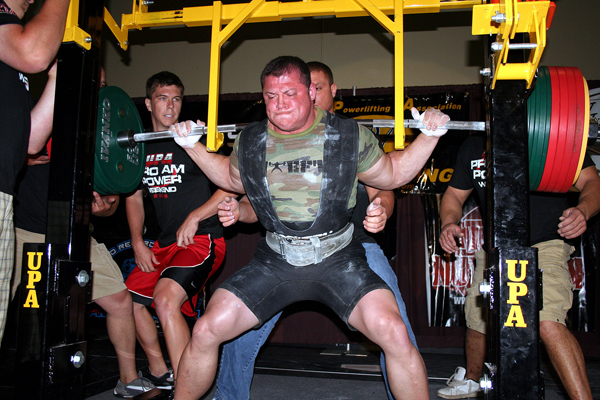
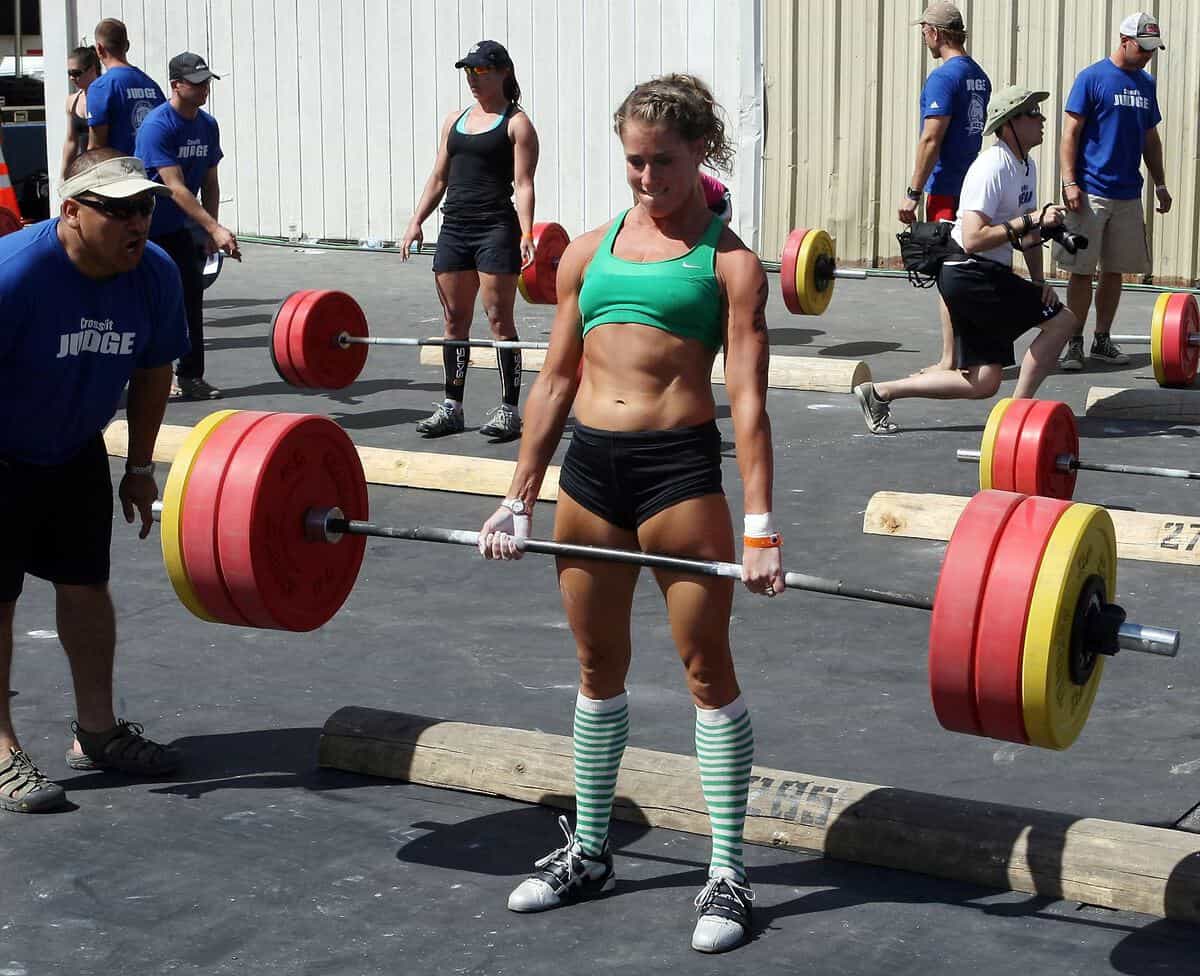
Whether you are a body builder, powerlifter, Olympic lifter, or recreational athlete, you’ll probably get a kick out of seeing just how much you can lift (or in some cases, it’s your job). While some weight lifters try to hit a new 1 repetition maximum (1RM) on the main lift every single workout, this is usually not a good idea. The potential for injury and over training increases with every max effort lift you attempt. Instead, a better philosophy is to ramp up to testing your 1RM using several 3-4 week micro-cycles. However, that is a discussion for another day.
Today I want to address the 1RM test itself, or more accurately the max effort test. If you are not in a competition at that exact moment, there is really no need to attempt a true 1RM. As long as you have a stable frame of reference for your max effort attempt, you will be able to quantify your progress. I would like to suggest using 2RM for your max effort attempt. The reasons for this are several – safety, psychological, CNS activation, and time under tension.
Strength coach Christian Thibaudeau explained it best throughout a series of 6 tweets titled “2RM better than 1RM for max effort.”
2RM better than 1RM for max effort
In case you are not subscribed to Christian’s Twitter feed or Facebook page, allow me to re-print his thoughts below:
REASON 1: puts you in a better mindset for success; implies that you will succeed on the first rep
REASON 2: safer as you can always stop after the first rep if you don’t feel the second
REASON 3: more practice with near-maximal weights, better development of strength-skill and CNS
REASON 4: MUCH less negative impact on CNS (measured by HVT monitor) with a 2RM vs. a 1RM.
REASON 5: have a much lesser psychological strain than 1RM and don’t require being in the zone as much
REASON 6: more fatigue (stimulation) imposed on the recruited FT fibers = more growth stimulation
Want big arms? Want lean, shredded arms? Then don’t make any of these arm training mistakes. Here are 6 great arm training tips for bodybuilders, fitness athletes, sports athletes, and newbies alike. Forget the myths, stop the mistakes, and train your arms proper!
Having great shoulders really makes you appear sleek and powerful. However, chest and back training does not suffice when attempting to build spectacular shoulders. You must train the shoulders directly, intensely, and often. Be attentive of these 6 common mistakes that people make when training shoulders.
Your chest is a large and complicated muscle. Considering its size you would think it would be easy to stimulate growth. Do some flat bench, another secondary movement, and your chest starts growing. Unfortunately the pecs are a much more muscle group area than that. In fact it is downright complex.
Training the pectoralis is a major puzzle to most bodybuilders, thinking a couple sets of bench press is all it takes, or going to the other extreme by dedicating a full day to 20 sets of different bench press variations. In this piece we would like to expose the answer to this puzzle by discussing the six most prevalent chest training errors and then providing tips to avoid them.
Read carefully; you will be surprised how many mistakes you are likely making.
Do you limit yourself by avoiding horizontal or vertical back movements? Did you know that your traps and lower back also need to be strengthened? Are you stuck on lat pull downs as your main back exercise? Can’t do a pull up?
Tsk, tsk, tsk…
Avoid these 6 common back training mistakes and you will have a much better chance of looking like Atlas and performing like an Olympian.
If you’ve grown tired of your flabby countenance, not to mention feeling awful all the time because you fill yourself with junk food and live a sedentary lifestyle, then perhaps you’re finally ready to lay down the remote, pick up some weights, and start turning your excess baggage into toned, tightened muscle mass. Of course, you’re not going to snap your fingers and look like Arnold Schwarzenegger circa his Mr. Olympia years.
It’s going to take time, effort, and probably money to trim down and bulk up. And you’re going to need some help along the way. Luckily, there are plenty of trainers, forums, and even body builders at your local gym that can offer you pointers along the way.
Here are just a few basic tips to get you started on your journey to a muscular physique.
Here’s a pretty cool infographic about building a bigger chest. I really enjoy infographics and I’m hoping you do too.
How to Get a Bigger Chest
It’s a dream for every men to have a good looking chest and there are wide range of exercises that can performed in order to grow your chest. The infographic shares data about different exercises for bigger chest along with few workout tips.
For an additional list of best chest exercises, also check out my post about the top 5 best chest exercises.
8-time Mr. Olympia Ronnie Coleman said it best: “shut up and squat.” [1] After all, there’s nothing better for building lower body mass. Squats force you to use numerous stabilizing muscles and exhaust hamstrings, quads, and glutes.
To get the most out of squats, however, they must be executed with correct form. Avoiding these common squat mistakes will take both your performance and physique to the next level.
Mistake #1: Not Engaging Your Core
The core is the body’s center of gravity and is where movement originates. [2]If you have a weak core, it will be much harder to keep the weight stable. It also places you at a greater risk for hip or lower back injury. To properly engage your core when performing a squat, concentrate on sucking your belly button towards your spine. A strong core will be able to maintain this posture throughout the exercise. If you have a weak core, using a weight belt around the waist protects the spine and keeps you from relaxing the core.
Regardless of the type of exercise regimen you’ve chosen, chances are that sooner or later you’re going to push yourself too hard and suffer some type of injury. Even if you’re careful, accidents can happen, so you want to be prepared when they do.
Luckily, the most common types of injuries that occur during exercise, such as sprains, strains, muscle cramps, and the like, are not too detrimental, although contact sports, for example, can certainly lead to more serious bodily harm. When it comes to addressing these issues so that you can get back on track with your workout routine, there are a few simple steps you can take to ensure a speedy recovery.
Here are some tips that should help you to treat any injuries you may sustain.
Diagnosis.
The first thing you need to do is determine the severity of your injury.
For example, it’s important to know the difference between a muscle cramp, which may be treated fairly immediately through stretching and hydrating, and a sprain or strain, which will certainly require more than a few minutes of rest and light stretching to correct before you can get back to lifting weights or swimming laps.
Although you may not be as qualified as a doctor to diagnose common exercise injuries, and you may therefore want to call your physician for an exam if you’re not sure about the cause of ongoing or chronic pain, most athletes and even amateur exercise aficionados can tell when something is seriously wrong and when they can handle recuperation on their own. (more…)
We all have someone that we envy. You know what I mean — the lifter with the toned abs and softball-sized biceps you can’t help but covet.
If you’re a beginner, getting from point A to point Bodybuilding Pro is just as hard as learning to ride a bike blindfolded. Fortunately, there are many successful weightlifters willing to share the tricks of the trade.
Here are a few tips from the pros to get you started on creating your own envy-worthy body.
If You Fail to Plan, Plan to Fail
“Lack of planning” is among the top 10 reasons beginner bodybuilders fail to achieve their goals. Planning daily workouts takes time, dedication, and some exercise research. It’s definitely not the most exciting part of training. But you won’t build bulging biceps and washboard abs by sporadically visiting the gym and dinking around on random equipment.
A good plan — like those experienced builders follow — doesn’t have to be elaborate.
Here are 4 basic elements to get you started: (more…)
CrossFit is one the fastest growing fitness programs in the United States, but why has it been so successful?
High intensity interval training, weight lifting, Olympic weight lifting, gymnastics, and rowing have all been around for a long time. However, CrossFit utilizes all of these movements and creates a complete program that takes the best of all the different disciplines.
This might seem overwhelming at first, but many CrossFit gyms allow scaling down to what you’re comfortable with, a trainer always watching you, and usually a two to three week starter program. This allows anyone of any age or fitness level to take advantage of CrossFit.
Hitting a plateau can drive you insane. Some people take months just to bump their bench press up by five pounds. A plateau is a good indicator that there’s something about your routine that just isn’t working for you anymore, and it means that it’s time for a change. Adding barbell complexes to your routine is a great technique for breaking plateaus. Barbell complexes are difficult, requiring you to perform several barbell exercises in a row as one set with no rest in between sets.
Benefits of Barbell Complexes
As a form of cardio, barbell complexes have several benefits over traditional cardio workouts. Barbell complexes burn a ton of calories but do not release cortisol the same way traditional cardio does. Cortisol is a stress hormone partly responsible for inducing fat storage in the body. However, barbell complexes release anabolic hormones that help you cut fat, making barbell complexes a great tool for cutting fat while you get out of your plateau.
The time required for traditional cardio can also be a bit of a drag, clocking in at thirty minutes or more. Barbell complexes are very fast-paced, and depending on how many sets you do, you may finish in ten to fifteen minutes – half the time of traditional cardio.
You may have heard about the many benefits of adding weight training to your current workout routine, or perhaps you’ve done your homework and debunked some of myths that were holding you back. Either way, you are about to embark on a new mission – to get PUMPED UP! Or ripped. Or shredded.
In any case, you are probably keen to start trying out weight machines at your gym and pumping iron with free weights and barbells. But before you begin your sojourn into the wide world of weight training it’s not a bad idea to cover the basics so that you don’t end up injuring yourself or others.
Here are just a few common mistakes that you’ll definitely want to avoid:
Enhance Sports Performance with Resistance Training
Most athletes do whatever exercises are most beneficial for their sport of choice. Often, the focus of a workout regimen is geared towards the demands of the sport in question.
For example, marathon runners train by running, while cyclists – you guessed it – train by riding their bikes. But whether you play soccer or basketball, you’re big on Parkour, or your idea of a good time includes a kayak and white-water rapids, you may find, at some point that your training sessions are not delivering the results that they used to. Or perhaps you’ve found that you can’t seem to get over a personal plateau with a pure cardio routine.
Whatever the case, you may eventually come to the realization that adding weight training to your efforts could be beneficial to your overall health and fitness, taking you to the next level with whatever form of athletics you prefer. And here are just a few benefits that should help convince you to take the leap and lift some weights.
You might, at one time or another, have considered building your own home gym but gave up on the idea because you were somewhat unsure of how to go about it. Constructing your own home gym is actually simple once you concentrate on acquiring the basic essentials and developing from there.
Here is a brilliant leg training article from the team at JackedPack. If you don’t know, JackedPack is a membership subscription service that sends you a monthly box of the samples of the best in sports nutrition supplements.
You can subscribe for 50% off your first month by using the coupon code SWOLE at checkout.
One of the best feelings in the world is when someone says to you, “Oh my gosh, are those Giant Sequoias or are those your legs?” We hope that all JackedPack members and non-members alike are able to experience the satisfaction and benefits of leg strength and size, and that’s why we’ve dedicated this post to giving our lower extremities the attention they deserve. We want everybody to be squatting school buses and deadlifting beached wales back into the ocean. We have included a stellar legs day workout that incorporates some awesome exercises that are sure to have people singing Sir Mix-A-Lot every time you walk in a room.
Any physical activity makes you expend more energy and as a result, if you are an active person, you will burn fat. Normally, the body will transform carbohydrates into energy. However, fat is used as fuel for metabolism and movement.
You could also use thermogenic foods and supplements, such as caffeine and hot peppers, to facilitate faster results, but diet and high intensity exercise are the two top ways to lose weight fast.
Weight Training and Burning Fat
Aside from a sensible diet, your fat loss program should include physical activities such as weight training and conditioning drills. However, the training sessions should implement an appropriate fat loss strategy for optimal results. Training with heavier weights and fewer reps has shown in numerous studies to preserve muscle mass on a low calorie diet, increase strength, stimulate fat burning, and elevate metabolism.
It is a common myth that we should train with low weight and high reps when trying to lose fat – that strategy is just a prescription for strength and muscle loss.
Going to the gym and doing the same workout over and over again is a sure way to prevent progress when it comes on to muscle growth. Repetition is a surefire way to make progress… in moderation. Too much repetition will leave you tired, bored, sore, lazy, and overtrained. Enough emphasis cannot be placed on the necessity of having a properly designed fitness program.
OK, so the triceps kickbacks are not the king of all triceps exercises, but in a recent study performed by the American Council of Exercise (ACE), triceps kickbacks are ranked 2nd, tied with dips. The very best triceps exercise is the diamond push up.
Don’t underestimate this study just because I grabbed your attention by starting with kickbacks. The study also used legit exercises like close grip bench, dips, and various push downs and extensions. See the table below, and then I’ll explain.
Table 1 Average EMG of the Entire Movement (Concentric and Eccentric)
Triceps Exercise
Combined Means
Long Head
Lateral Head
Triangle Push-up
100
100
100
Kickbacks
87 ± 26.58
88 ± 33.0
87 ± 23.7
Dips
87 ± 19.87
87 ± 21.3
88 ± 20.0
Overhead Triceps Extensions
76 ± 16.09 *
81 ± 21.4 *
72 ± 16.5 *
Rope Pushdowns
74 ± 22.64 *
81 ± 32.3 *
67 ± 15.7 *†
Bar Pushdowns
67 ± 20.48 *
75 ± 29.3 *
59 ± 14.3 *†
Lying Barbell Triceps Extensions
62 ± 16.25 *
70 ± 20.9 *
55 ± 14.1 *†
Close Grip Bench Press
62 ± 15.88 *
61 ± 16.9 *
63 ± 15.5 *
* Significantly lower than the Triangle Push-up (p < 0.05) † Significantly lower than the Long Head (p < 0.05)
For those who still don’t believe Werewolf Muscle Training works, here is more support of my theory that increased frequency combined with stopping short of fatigue, produces equal if not better results that training a muscle once a week for an hour, with a ton of volume, going to failure on most sets.
The central nervous system is extremely important for performance, and should be stimulated aggressively and frequently, but should not often be fatigued. This also helps explain why you can train muscles when they’re sore… it works just as long as the CNS has recovered.
In this video you will find Christian Thibaudeau from T-Nation. He is way stronger than you or I, and he is just about as ripped as I could ever hope to be. A true inspiration.